CNC production tracking software for precision machining in watchmaking and jewelry
Atsora Tracking provides real-time visibility across the entire machine park — without manual entry. Manage your machining cycles, measure your OEE, and secure each series of high-value parts.
Summary
In jewelry and in watchmaking, each machined part concentrates a high value — material, operator time, finishing requirements. An undetected cycle deviation, a poorly controlled adjustment, or an unanticipated stop directly results in scrap, rework, or delivery delays.
Atsora Tracking collects data directly from CNC machines and lathes, without manual entry. Machine states, actual cycle times, causes of stoppage, setup times: everything is measured, consolidated, and reported in real time. Workshops thus have a factual basis to manage their production, ensure their deadlines, and maintain the quality of each series — regardless of the complexity of the machine park.
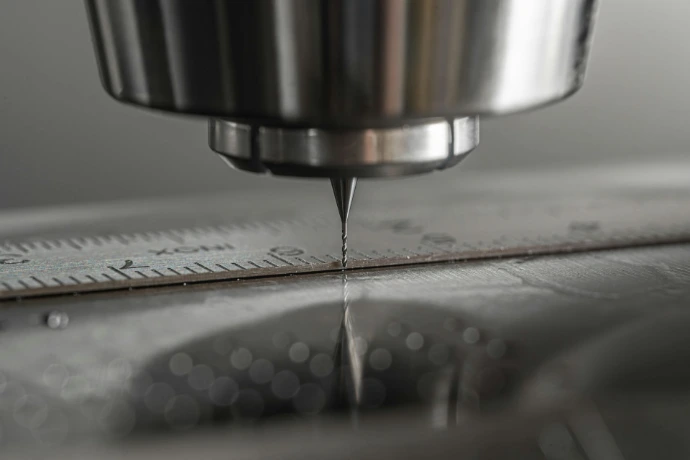
Machining parts where every micron counts
Plates, cases, gears, setting rings — the parts are small, tolerances are measured in microns, and the materials are high-end. In this context, the repeatability of cycles is not an option: it is the condition for quality.
Atsora Tracking continuously monitors each machine in the fleet and immediately detects any cycle drift — before it generates scrap or non-conformance. The solution unifies data from the entire fleet, whether it involves 5-axis CNC centers, multi-spindle lathes, or special machines, and provides a consolidated and actionable real-time view. Gone are the indicators calculated retrospectively based on declarative data: the workshop sees what is happening, as it happens.
Produce accurately, without loss or approximation
A watchmaker operator often manages three to five machines in parallel. The slightest drift in cycle time or an unanticipated tool change on one of the stations can impact the entire chain — costs, quality, deadlines.
Atsora automatically identifies production phases, settings, micro-stops, and drifts on each machine. The operator has a real-time view of the status of their fleet: they instantly know which machines are running, which are stopped, and which require priority intervention. They have nothing to enter — the data comes directly from the machines.
Micro-stops are automatically detected, timestamped, and classified. Often invisible in a declarative management system, they are nonetheless the main source of OEE losses in precision machining workshops. Precisely identifying them is the first step to reducing them.
Key indicators tracked:
OEE / OOE / TEEP
Real cycle time vs theoretical
Machine utilization rate
Detected short stops
Identified causes of stoppage
Number of produced parts per machine, per shift, per hour
Drifts in cadence and effective availability
Data collected directly from the machines — without operator input.
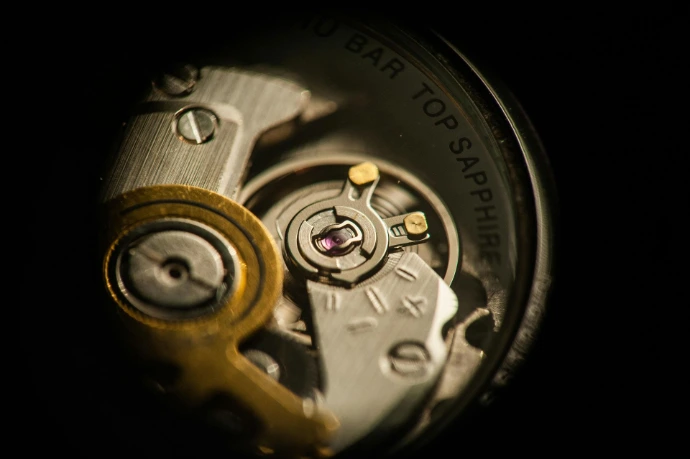
Mastering settings to make each series profitable
In watchmaking and jewelry, production runs are short and reference changes are frequent. Setup time can account for 30 to 50% of the total time for a small batch — often without being measured precisely. This is where a large part of profitability is determined, and it is often where estimates go awry.
Atsora precisely measures each setup period, distinguishes between intervention and validation phases, and allows for the analysis of variations by machine, by team, or by product reference. This data helps identify positions that concentrate the most unproductive time, standardize series change procedures, and make estimates more reliable based on actual times — not estimated times. Workshops that have implemented this approach generally observe a reduction of 15 to 30% in changeover times.
Concrete actions to manage performance on a daily basis
Atsora Trackingprovidesleversthat can be directly utilized by jewelry and watchmaking workshops, without complicating the existing organization., sans complexifier l'organisation en place.
Accurate tracking of OEE and cycle times
Atsora precisely identifies which part is being machined, on which machine, at what time, and under what conditions. Each cycle is tracked and associated with a CNC program, a production order, or a product reference. This fine visibility allows for the comparison of theoretical and actual cycle times, quick detection of discrepancies, and making production decisions based on factual data — not estimates.
Real-time operational assistance
The status of each machine is visible at all times: in production, stopped, in alarm, in adjustment, or waiting for intervention. The operator can prioritize their actions, intervene on critical stations first, and optimize the simultaneous management of multiple equipment. This assistance improves the workshop's responsiveness without adding any administrative burden.
Machine data for precise decision-making
Performance indicators — actual cycle time, utilization rate, causes of downtime, cadence drifts — are automatically consolidated. The workshop has a factual basis to adjust machining parameters, anticipate maintenance interventions, secure tool changes, and ensure standard times. Atsora transforms machine data into a concrete lever for continuous improvement, directly serving the workshop's expertise.
Atsora thus transforms machine data into a concrete support tool for expertise, serving controlled production and sustainable excellence.
Securing demanding expertise
High-end watch brands and their subcontractors face increasing traceability requirements. Documenting the actual machining conditions of each part is no longer a luxury — it is a requirement to meet quality audits and secure processes over time.
Atsora automatically records each CNC cycle: actual duration, program used, machine status, associated events. Each cycle can be linked to a manufacturing order or product reference via API, Data Matrix, or QR code. The complete history is structured and accessible at any time — to analyze a drift, respond to a quality control, or justify a process during an audit at a partner brand. Unlike an ERP that manages administrative traceability, Atsora ensures operational traceability: it is the actual production data, sourced directly from the machines, that constitutes the proof of machining.
A solution that integrates into your workshop without disrupting production
Atsora connects directly to CNC machines and lathes without modifying existing processes or adding data entry for operators. The deployment is gradual — machine by machine or cell by cell — to secure adoption at each step.
Interoperability with your ecosystem
- Connection with existing ERP and MES
- Data exchange via API
- Association of machine data with manufacturing orders
- Traceability by reference: Data Matrix, QR code
- Modular and scalable architecture
Gradual deployment, tailored to your fleet
- Start with a pilot scope of 2 to 5 machines
- Progressive extension to the entire fleet
- CNC compatibility: Fanuc, Siemens, Mitsubishi, Haas, and others
- Hardware module for cam lathes and machines without network interface
- Support for deployment and team onboarding
Frequently Asked Questions
Yes. CNC machines are connected via their native data (Fanuc, Mitsubishi, Siemens…). Cam lathes and machines without a network interface are equipped with a hardware module that reports machine states and ensures automatic counting of parts. The result is a coherent view of the entire park, regardless of its composition.
Atsora's hardware collection module detects machine states (in production, stopped) and ensures the counting of produced parts. The calculation of OEE is as reliable as on a modern CNC machine — without modification of the machine, without operator input.
A watchmaking ERP manages administrative traceability: bills of materials, serial numbers, stock movements, management of precious materials. Atsora focuses on real-time operational performance: cycle times, downtimes, micro-downtimes, drifts, OEE — what is actually happening on the machines. The two are complementary and can be connected via API.
The first step — accurately measuring actual setup times — often reveals significant discrepancies with estimated times. The targeted actions that follow generally allow for a reduction of 15 to 30% in changeover times.
No. Atsora connects to machines without modifying machining processes or adding burden to operators. The gradual deployment — starting with a pilot of 2 to 5 machines — allows for validation of data collection and training of teams before expanding to the entire fleet.
Each CNC cycle is automatically detected, timestamped, and recorded. It is associated with a part or batch via ERP integration, Data Matrix scan, or QR code. The complete history of machining conditions is preserved and can be accessed at any time — quality control, audit, drift analysis.
Talk to an Atsora expert
Describe your workshop, your machine park, and your production challenges. We will show you how Atsora Tracking can provide you with immediate operational visibility.